
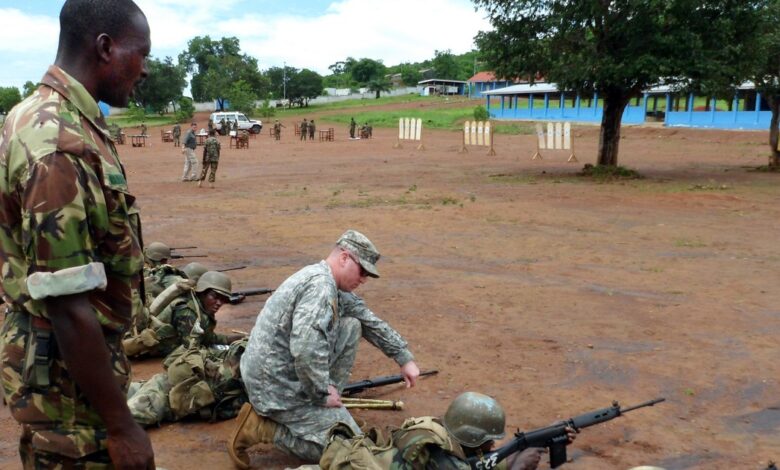
Nigeria’s military has confirmed that approximately 200 US troops expected to arrive in the coming weeks will not participate in combat operations, stressing that Nigerian forces will retain full command over all security decisions.
The deployment follows comments from a U.S. official indicating that the Pentagon plans to send troops to train Nigerian forces battling Islamist militant groups. The move comes weeks after President Donald Trump ordered strikes against what he described as Islamic State targets.
Last week, the U.S. military acknowledged it had deployed US troops to Nigeria but did not provide further details. The confirmation marked Washington’s first public admission of personnel presence in the country since Christmas Day strikes were reported.
Nigeria Retains Full Operational Control
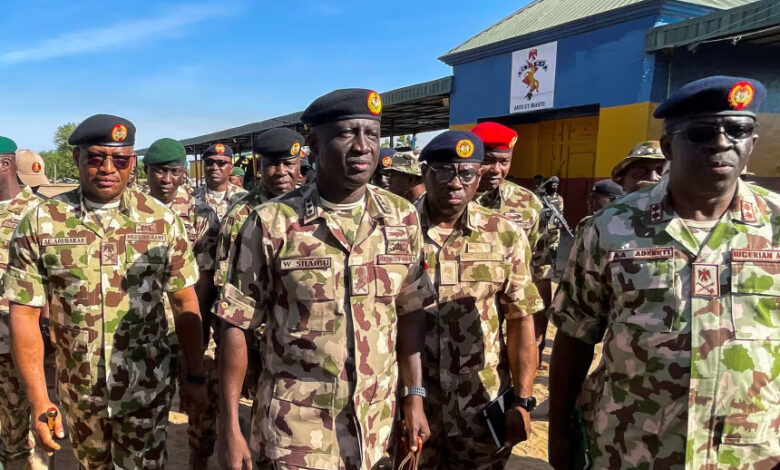
Major General Samaila Uba, spokesperson for Nigeria’s Defence Headquarters, said Abuja formally requested the U.S. presence strictly for technical training and advisory support.
“These personnel do not serve in a combat capacity and will not assume a direct operational role,” Uba said.
“Nigerian forces retain full command authority, make all operational decisions and will lead all missions on Nigerian sovereign territory.”
He did not disclose the exact arrival timeline but confirmed the deployment is part of cooperation under the U.S.–Nigeria Joint Working Group framework.
Growing International Scrutiny
The announcement comes amid increased pressure from Washington.
President Trump recently accused Nigeria of failing to protect Christian communities from Islamist militant violence in parts of the northwest. Nigerian authorities have rejected allegations of religious persecution, maintaining that security operations target armed groups responsible for attacks on both Christians and Muslims.
READ ALSO: Burkina Faso Boosts Emergency Response Capacity with 64 New Trucks for CONASUR
On Tuesday, U.S. Republican lawmakers introduced the Nigeria Religious Freedom and Accountability Act of 2026, which would require the U.S. Secretary of State to report to Congress on American efforts to address what they described as “ongoing religious persecution and mass atrocities against Christians in Nigeria.”
The bill is sponsored by Representative Riley Moore, who led a congressional delegation to Nigeria in December and has publicly criticised the Nigerian government’s handling of security threats affecting Christian communities.
Overlapping Security Crises
Nigeria continues to grapple with multiple security challenges across different regions:
- A long-running Islamist insurgency in the northeast
- Armed kidnapping gangs operating in the northwest
- Deadly farmer–herder clashes in the central region
Security analysts say these conflicts are often fuelled by a complex mix of ethnic, economic, and religious tensions.
Despite international criticism, Nigerian officials maintain that their security strategy targets criminal and extremist networks irrespective of religion.
Strategic Partnership, Not Intervention
Defence authorities emphasised that the U.S. deployment should not be interpreted as a combat intervention but rather as a capacity-building partnership aimed at strengthening Nigeria’s counterterrorism capabilities.
The training mission signals continued military cooperation between Abuja and Washington at a time when West Africa faces shifting security dynamics, including the spread of extremist groups across the Sahel region.
Observers say the effectiveness of the collaboration will depend on intelligence-sharing, training quality, and Nigeria’s broader security reforms.