
SpaceX Prioritizes Lunar City Over Mars Colony as Elon Musk Announces 10-Year Moon Plan

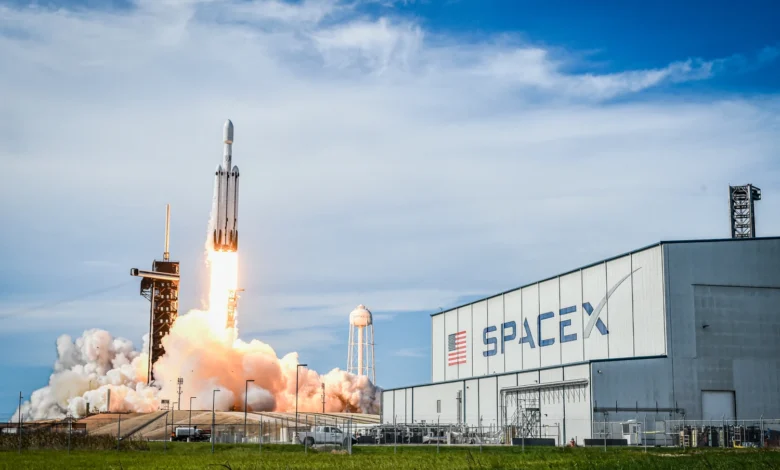
Elon Musk’s SpaceX has announced a major strategic shift that could redefine the future of space exploration. Instead of prioritizing a Mars colony, the company now plans to focus on building a self-sustaining city on the Moon within the next 10 years.
The announcement, made by Musk on the social media platform X, marks a significant pivot from his long-standing ambition of colonizing Mars, a goal that has defined SpaceX since its founding in 2002.
According to Musk, the Moon presents a faster and more practical path to securing humanity’s future beyond Earth.
Why SpaceX Is Choosing the Moon First
The decision is largely based on distance and timing.
The Moon is approximately 384,000 kilometers from Earth, while Mars averages around 225 million kilometers away. Missions to Mars can only launch every 26 months when planetary alignment allows, and the journey takes about six months.
In contrast, missions to the Moon can launch roughly every 10 days and take just two days to arrive.
This allows for faster testing, quicker problem-solving, and more frequent supply missions, key factors in building what Musk describes as a “self-growing city.”
For SpaceX, speed of iteration matters. The Moon offers a realistic environment to develop infrastructure before attempting the far more complex challenge of Mars colonization.
What Is a “Self-Growing” Lunar City?
Musk’s language suggests ambitions beyond a scientific research base.
A self-growing city would mean:
- Using lunar soil (regolith) for construction
- Extracting water ice from permanently shadowed craters
- Producing fuel locally
- Establishing sustainable power systems
- Creating manufacturing capabilities on-site
In short, the goal is to build a settlement that expands using its own resources — reducing dependence on Earth.
This is a major step beyond temporary outposts and signals a transition toward industrial-scale space habitation.
Alignment With NASA’s Artemis Program
The shift also brings SpaceX closer to NASA’s Artemis program, which aims to return humans to the Moon for the first time since 1972.
SpaceX currently holds a nearly $3 billion contract to develop NASA’s lunar lander using its Starship rocket system.
However, Starship remains in early development and has not yet completed an operational orbital mission. Delays have pushed NASA’s Artemis III Moon landing to no earlier than 2028.
Artemis II, a crewed lunar flyby, is expected as soon as March 2026.
If successful, SpaceX’s lunar pivot could accelerate global efforts to establish a permanent human presence on the Moon.
Mars Is Not Abandoned
Despite the shift, Musk insists Mars remains the ultimate goal.
He indicated that Mars development could begin within five to seven years, running parallel to lunar operations.
Musk continues to argue that humanity must become a multi-planetary species to protect civilization from environmental disasters, technological threats, or unforeseen global catastrophes.
In this strategy, the Moon becomes a proving ground — a stepping stone before the bigger leap to Mars.
Growing Global Competition in Space
The renewed focus on the Moon comes amid rising competition between the United States and China to return humans to the lunar surface this decade.
No human has walked on the Moon since NASA’s Apollo 17 mission in 1972.
Meanwhile:
- Blue Origin is halting suborbital tourism to focus on lunar lander development.
- SpaceX is reportedly targeting an uncrewed Moon landing in March 2027.
- The company may launch a public offering that could raise $50 billion.
The race to dominate lunar infrastructure is accelerating — and the economic stakes are enormous.
What This Means for Africa
While Africa is not currently a central player in lunar missions, the continent’s space programs are expanding rapidly.
Countries like Nigeria, South Africa, Egypt, and Ghana are investing in satellite technology, research partnerships, and space policy development.
As space industrialization becomes reality, emerging economies may find new opportunities in:
- Space mining partnerships
- Lunar resource research
- Satellite and communication infrastructure
- Aerospace engineering talent development
The global space economy is projected to exceed $1 trillion in the coming decades. Africa cannot afford to remain a spectator.
The Bigger Picture
SpaceX’s shift toward the Moon signals a more practical, incremental strategy in humanity’s expansion beyond Earth.
The Moon may come first, but in Musk’s long-term vision, it is preparation for something far greater.
TheAfriPost will continue to monitor how this lunar pivot reshapes global power dynamics, technological innovation, and the future of civilization itself.